
Field Test Results of “KAPONIR” Primary Mobile Shelters
Official report on blast resistance and real-explosion testing
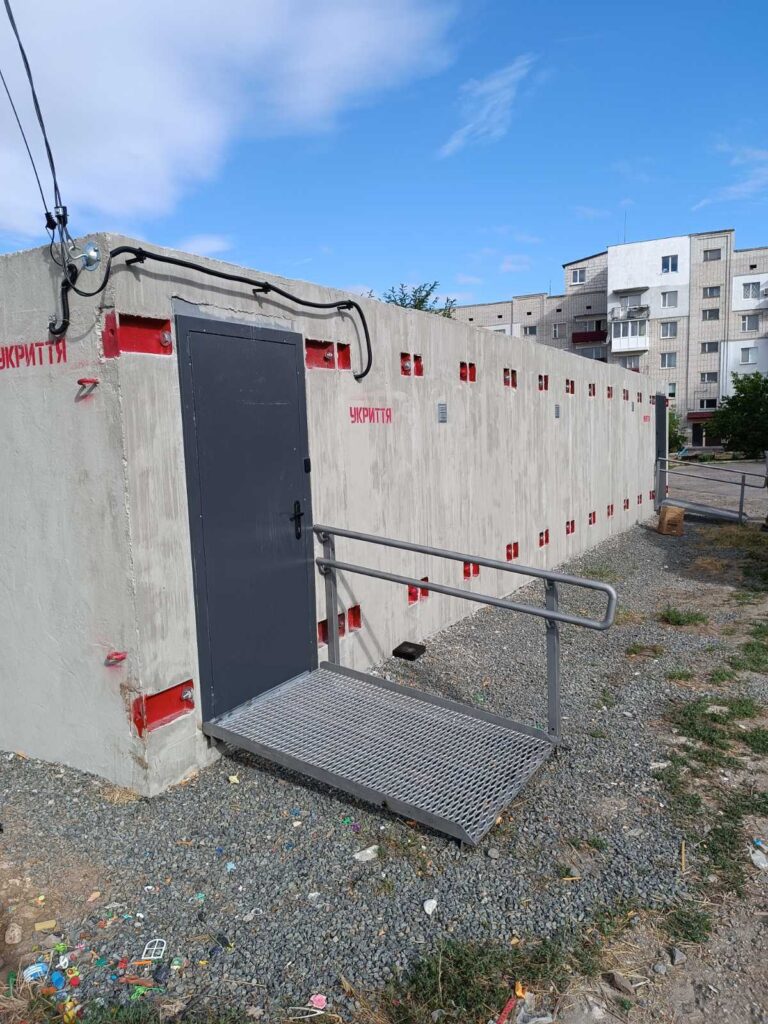
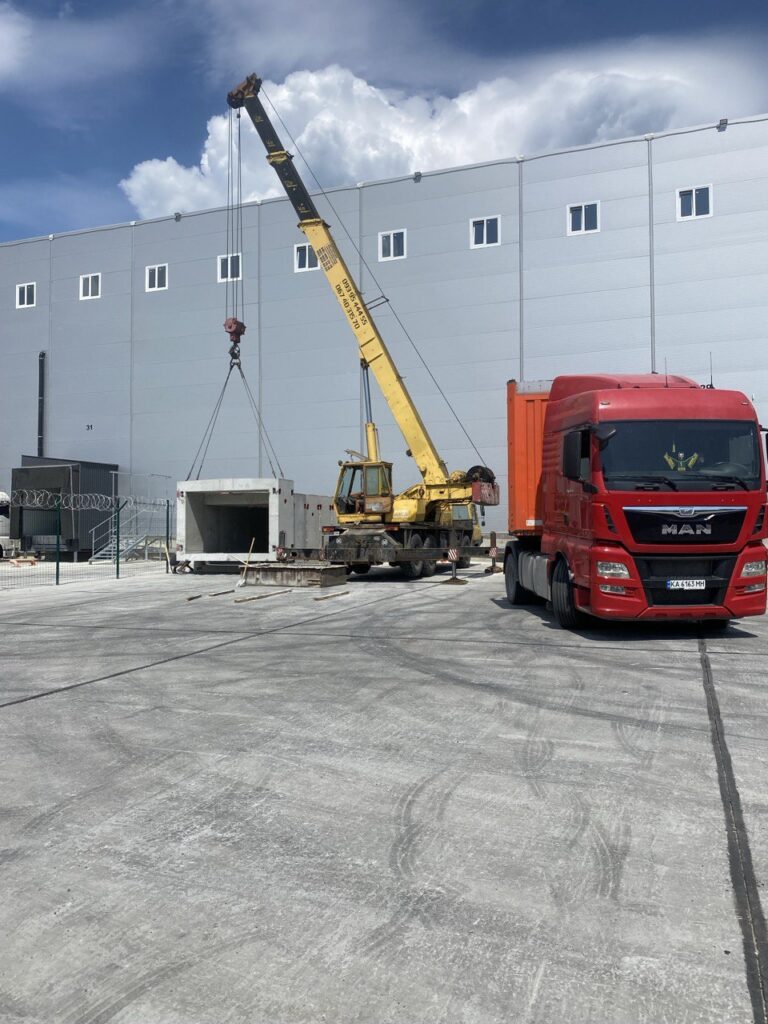
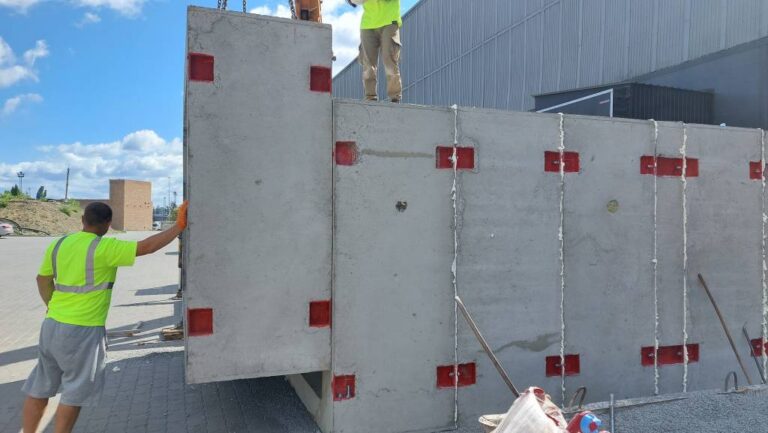
UKRPOSTACHBUD-UKRAINKA LLC confirms the high reliability and safety of its products. Our primary mobile shelters (PMU) MMZU-100 “KAPONIR” 2.0 and MMZU-100 “KAPONIR” 2.5 have passed a rigorous series of field tests with the participation of specialists from the Research and Testing Department of the National Defence University of Ukraine and representatives of the State Certification Center of the State Emergency Service of Ukraine.
The main goal of the tests was to verify the structural strength limit under a blast shock wave (over 100 kPa) and to evaluate protection against secondary spalling hazards (concrete spalling on the interior surface).
Test Progression and Detonation Results
1. Frontal Detonation
The first phase tested the resistance of the entrance group and the facade wall. The detonation was executed at a distance of 3 meters from the structure at a height of 0.8 m from the ground using a TNT charge.
Impact: The facade fully withstood the blast. The entrance group retained its structural integrity, with no block displacement or deformation detected. Wall geometry and load-bearing capacity remained 100% intact.
2. Lateral Detonation
The second detonation was conducted near the side wall of the module at a distance of 3 meters and a height of 0.8 m to test the durability of the side panels and inter-block joints.
Impact: The structure absorbed the explosion energy. Only surface marks were recorded on the exterior, with no cracking or concrete penetration. The interior remained undamaged, and no hazardous spalling occurred.
3. Shahed Warhead Detonation (40 kg) and Roof Assessment
The most demanding phase involved simulating a direct hit and detonation of a Shahed-type warhead (approximately 40 kg of explosive) directly above the roof and adjacent to the structure.
Impact and Protective Mesh Performance: The high-power explosion caused severe damage to the outer concrete layer of the roof, heavily shattering it in certain areas. However, no roof collapse into the interior occurred.
Our internal protective mesh functioned as designed: it securely retained the shattered concrete debris, prevented it from falling into the occupied area, and fully protected the interior space. Occupants inside would have remained unharmed.
Key Test Conclusions
- Protection from secondary fragments: Thanks to the internal mesh, there is a complete absence of hazardous concrete spalling on the interior.
- Structural collapse prevention: Even with top-layer concrete failure caused by a 40 kg warhead explosion, the mesh retains the mass and prevents collapse.
- Equipment survival: Measurement devices placed inside the module remained fully operational throughout all detonations.
Compliance Confirmation with DSTU 9329:2025
Based on the test results, official Field Test Protocol No. 726-V/2025 was issued. The MMZU-100 “KAPONIR” shelters fully comply with DSTU 9329:2025 requirements for short-term protection of personnel against conventional weapons hazards.